

One in five people has mental health problems 14 ed i 90 days following the diagnosis of positivity to Covid-19. Cases of depression are particularly numerous, to the point that we're starting to talk about "post-Covid depression", widespread especially among young people. According to researchers at Boston University, the rate of depression in the United States has increased threefold compared to the period before the pandemic. In Italy, depressive-type symptoms increased fivefold, so much so that they are recorded in the 32% of the population. It is estimated that we will have a total of around 150 thousand more cases of major depression.
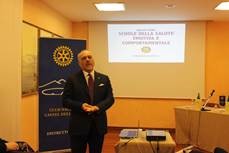
It is in this context that the campaign against depression "Rotary Action for Depression" was born, promoted by the Rotary Club “Castel dell'Ovo” in collaboration with i 12 club of the Neapolitan Group and others 5 club from Campania. Every Friday, at 18, the "Energy Live" will take place on the Facebook community of the same name with the psychiatrist and psychotherapist Vincenzo Barretta and the actress Veronica Mazza. The direction is by Domenico Di Frenna. Guest of Friday's "Energy Direct". 12 February he will be the general director of the ASL Napoli 1 Center, Ciro Verdoliva. Community users will be able to interact with the protagonists of the live broadcast.
«The Covid-19 pandemic is inevitably generating anguish in the world population and will have huge consequences in terms of mental health – explains Barretta, creator of the project and president of the Rotary Club “Castel dell'Ovo” —. It is estimated that the repercussions in this sense will persist longer and peak later than the actual pandemic. Indeed, during epidemics the number of people affected by these problems tends to be even greater than that of people affected by the infection. In such a context it is important to raise awareness and inform the population of these risks, with the aim of breaking down the stigma and prejudice which still today makes the thresholds for access to psychological and psychiatric care very high. It is in this direction that our project is going".