

In the book-dialogue with Mario Lamboglia, Gianni Pittella retraces almost fifty years of public commitment. Between personal memory and great transformations, a question emerges aimed above all at young people: what space can political participation have today??
A town in Basilicata and the European institutions may seem like two worlds apart. In the story of Gianni Pittella, Instead, Lauria and Brussels are linked by a specific idea: Politics makes sense when it manages to connect communities with decisions that affect their future.
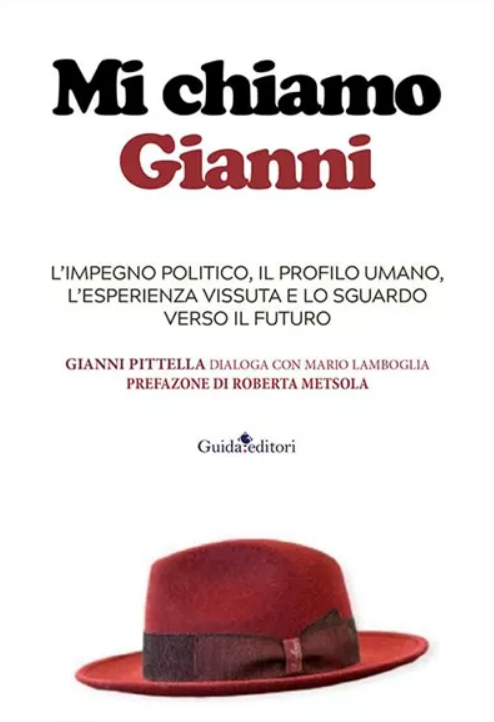
This is one of the themes that run through My name is Gianni. Political commitment, the human profile, the lived experience and the gaze towards the future, the volume published by Guida and constructed as a dialogue between Pittella and the journalist Mario Lamboglia. The preface by Roberta Metsola introduces a story that crosses the private and public life of the former MEP, without reducing it to a succession of tasks.
The choice of conversation gives the book its rhythm. Lamboglia accompanies Pittella among family memories, political education, meetings, successes and defeats. In one interview with LaC News24, Pittella explains that he wanted this form to also convey emotions, doubts and errors: aspects that an institutional autobiography would risk leaving in the background.
The South as a starting point
Lucanian roots occupy a central place in the story. Lauria is the place of the family, of readings, of friendships and first political discussions. It is there that a way of understanding public commitment based on direct confrontation with people takes shape.
The connection with the South also accompanies Pittella during the years spent in the European Parliament. In the interview, summarizes the meaning of this journey in one sentence: «I brought the South to Europe and Europe to the South». For him, local identity and the European horizon reinforce each other; Southern Italy can find a space in Europe to express its potential and take on a role in the Mediterranean.
This perspective gives unity to very different experiences: work in institutions, travel in the territories, listening to communities e, later, his commitment as mayor of Lauria. In the book, international issues coexist with the daily requests of citizens. A road to fix or a service to improve can become, for those who administer, the most pressing problem of the day.
The man behind the assignments
Alongside the political dimension, My name is Gianni leave room for family, to the affections and personal cost of a life spent between travel and public responsibilities. Pittella recognizes that, retracing their history, What emerged above all was the connection with his roots and with the people who accompanied him. Also remember passion, the values of democratic socialism and the social doctrine of the Church among the references that guided his path.
The volume thus tries to tell what it means to dedicate many years to politics: the battles fought, but also the relationships built, the difficult choices and what you understand looking back.
A conversation aimed at the future
The book finally opens up to the questions of the present: mistrust in institutions, inequalities, populisms and the future of Europe. In the interview Pittella insists on the need to defend democracy every day and invites young people not to give up on a vision of the future. His hope is that these pages will encourage someone to take an interest in public affairs and participate.
This is where the story of a career becomes a broader reflection. When assignments end, the experience can still be shared; ideas can be discussed and conveyed. My name is Gianni entrusts this very possibility to the reader: consider politics an activity based on listening, responsibility and presence, to which the new generations can give new forms.